
Jump to content: Overview | Personality | Appearance | Size & Lifespan | Daily Care | Health | Lifestyle | History | Summary
1. Overview
The Bengal is a sleek, athletic, highly active cat breed best known for a wild, leopard-like coat (spots/rosettes or marbling) paired with a bold, curious personality.
Bengals are a hybrid-origin breed (Asian leopard cat × domestic cat). While modern Bengals are fully domestic, they tend to retain a high energy level, strong curiosity, and athleticism compared to many other breeds.
2. Personality & Temperament:
Bengals are commonly described as:
- Highly active and inquisitive
- Intelligent and playful (often need structured stimulation)
- Confident, curious, and athletic
- Independent but friendly
- Often enjoy climbing and may be fascinated by water
Important note: Bengals are often recommended for experienced or very engaged owners, because under-stimulation can lead to frustration behaviours (mischief, excessive vocalising, destructive boredom).
Family & Pets
- Can do well with children if introduced carefully and the cat’s needs are met
- May live with other pets, but introductions matter (some lines can be bold/dominant)
- Early-generation Bengals (closer to Asian leopard cat ancestry) can be much more challenging and are not ideal for most homes
3. Appearance & Physical Characteristics
Build:
- Athletic, supple, muscular body
- Strong legs and a sleek outline (built for speed and jumping)
Head & Face:
- Relatively small head compared to body, with strong facial structure
- Almond-shaped eyes are common; expression often described as alert and “wild”
Coat
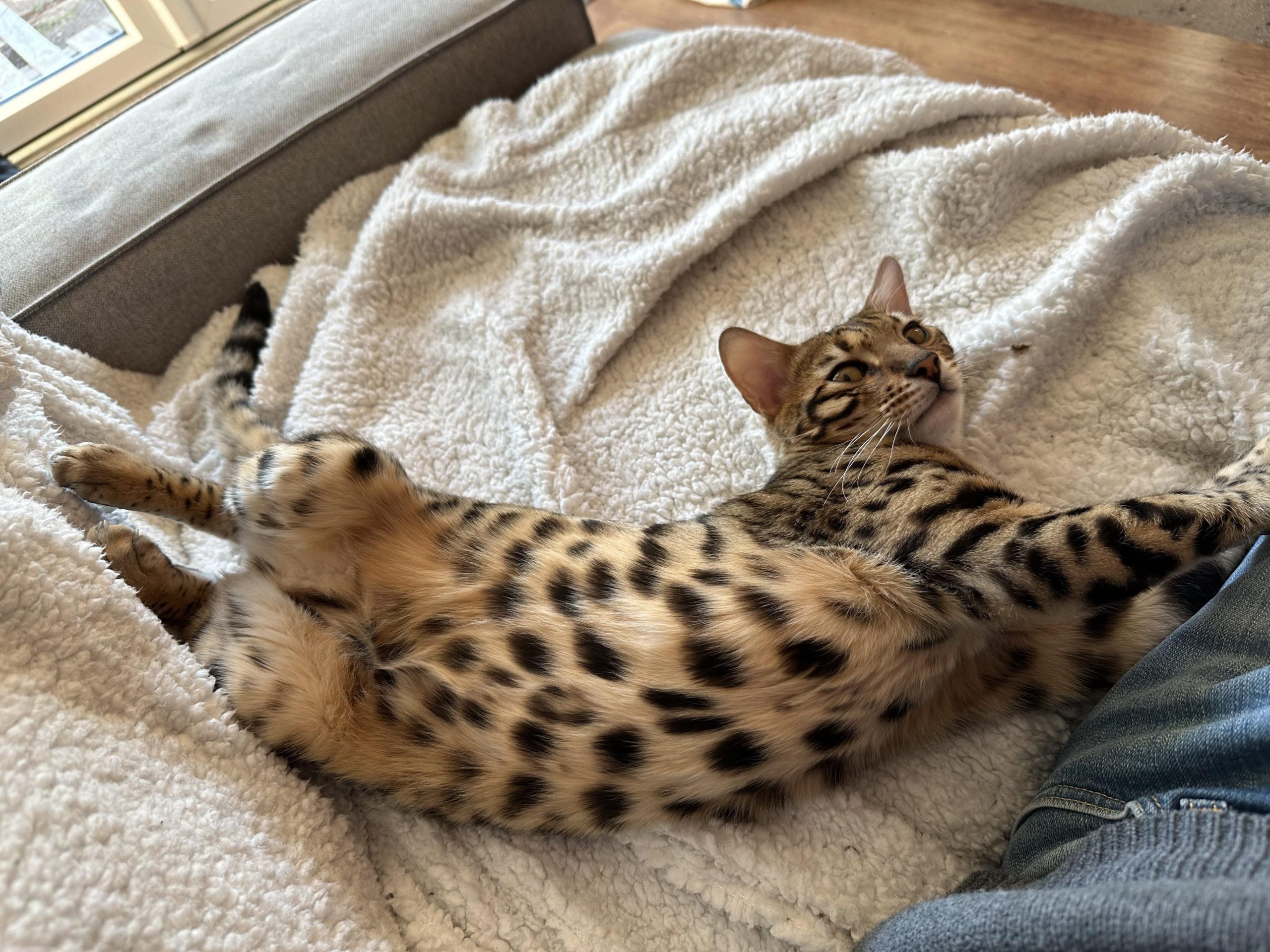
- Bengals have a short, dense coat that can show a distinctive shine/glitter in some lines.
Colors & Patterns
- Marbled
- Spotted/rosetted
- Arrowhead-style markings
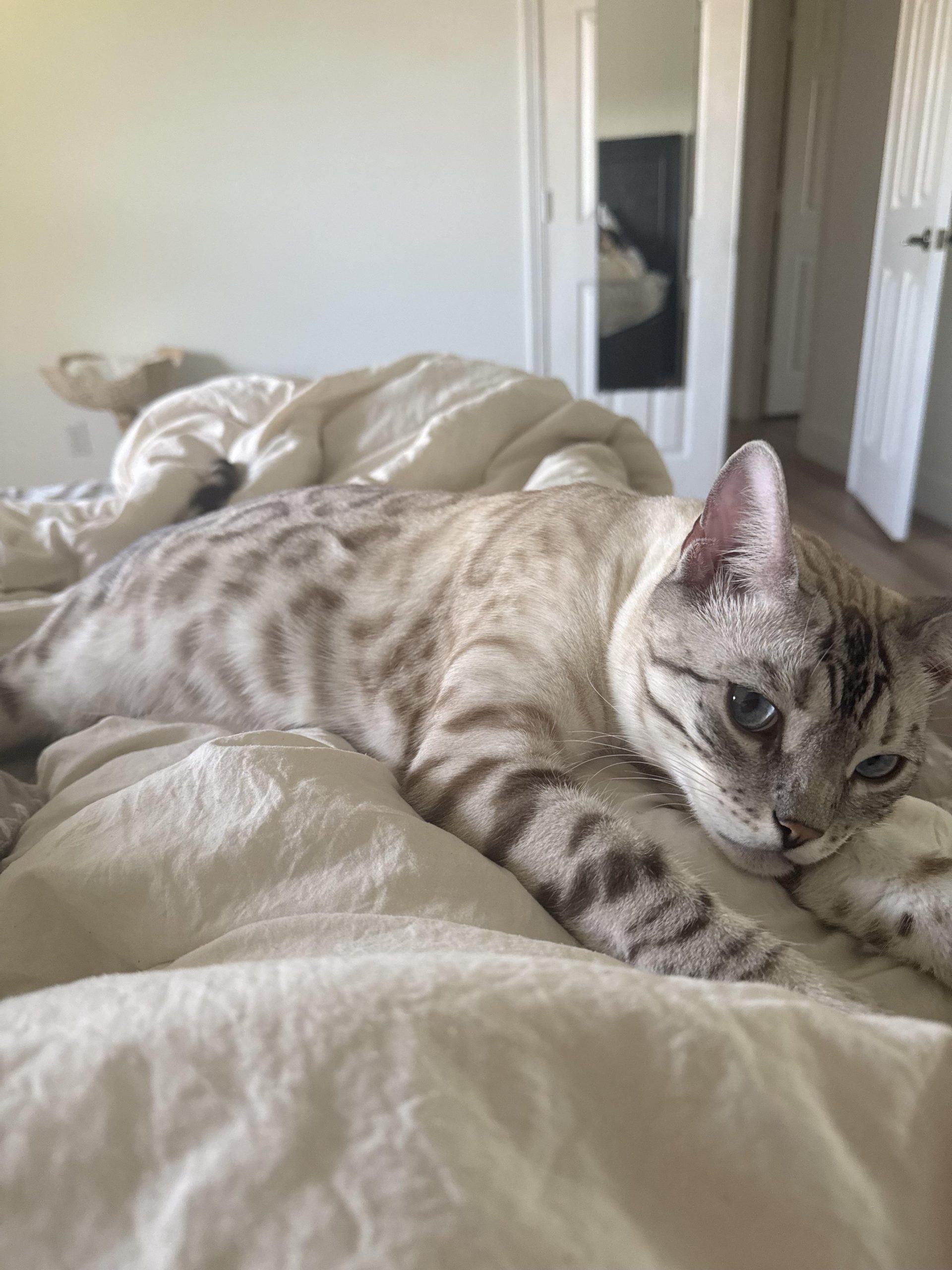
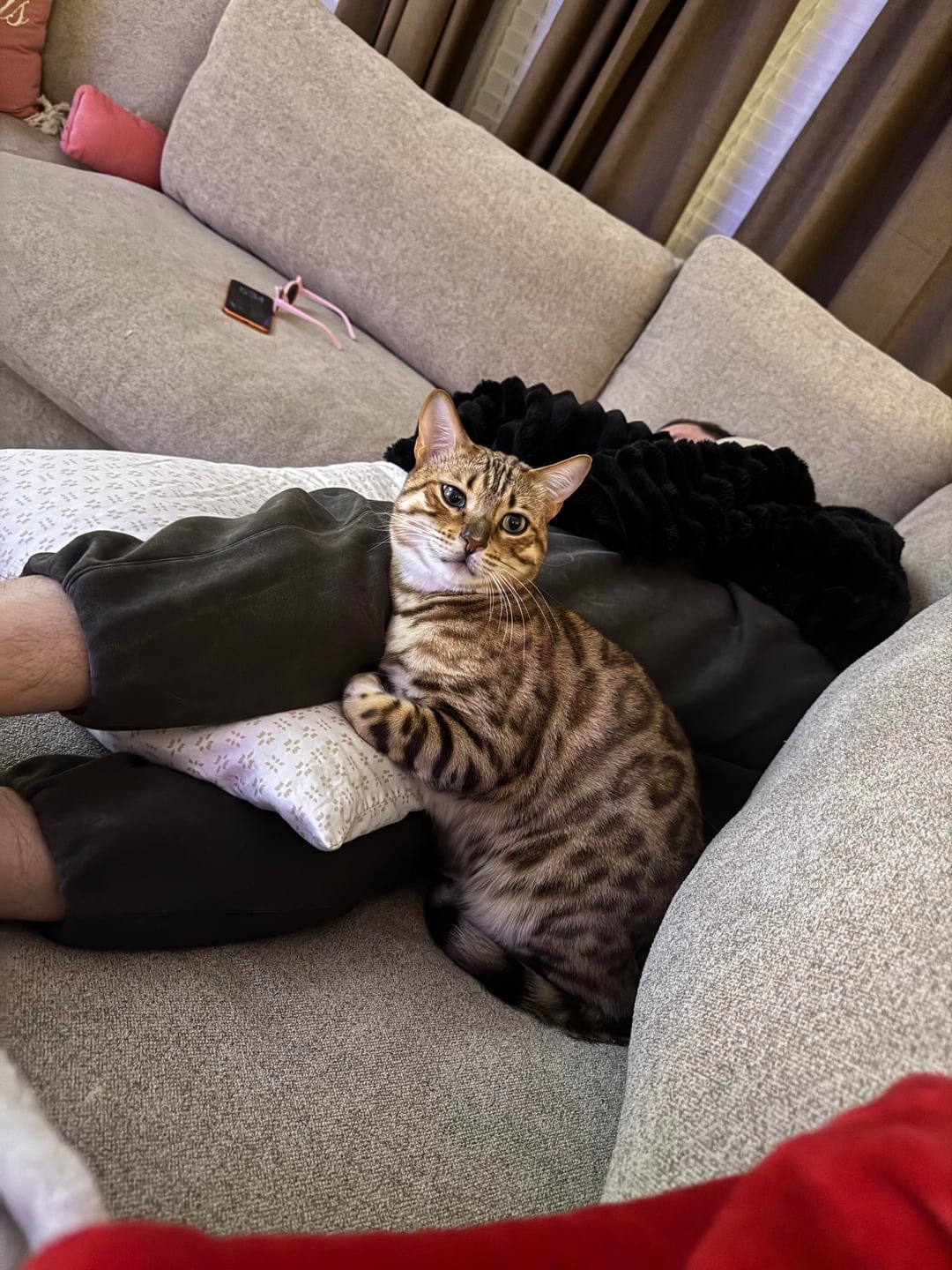
- Brown, Silver, and snow varieties
Eye Color
Eye colour varies by colour line; many Bengals have green/gold tones, while “snow” varieties may show blue or aqua shades depending on genetics/line.
4. Size, Growth & Lifespan
- Females: ~8-12 lb (3.6 – 5.4kg)
- Males: ~10-15 lb (4.5 – 6.8kg)
Growth Rate
- Active, athletic breed that develops lean muscle with appropriate exercise and play
- Size and maturity can vary depending on lineage and lifestyle
- Often not fully developed until 3 – 4 years of age
- Some lines may continue filling out until 4 – 5 years
Lifespan
- Commonly 12 – 16 years
- Many live into their late teens with good care
- Lifespan varies depending on genetics, diet, lifestyle, and veterinary care
- Indoor cats typically live longer than outdoor or free-roaming cats
5. Daily Care & Maintenance
Grooming
- Usually low maintenance compared to longhaired breeds
- Weekly brushing is typically enough for most Bengals
Exercise & Enrichment
- High enrichment needs: interactive play, climbing, and problem-solving games
- Training (including clicker/target training) is often recommended for mental stimulation
- Many enjoy climbing and exploring, and some enjoy water play
Feeding & Weight Control
- Keep a lean body condition – active cats still gain weight if bored or overfed
- Consistent routine and measured feeding can help maintain athletic condition
General Maintenance
- Regular nail trimming may be required
- Parasite prevention
- Routine vet visits matter (especially in a busy, athletic breed)
6. Health & Common Medical Concerns
Bengals are often described as generally robust, but they can be predisposed to inherited conditions, so health testing and responsible breeding are important.
Most important to know
- Hypertrophic cardiomyopathy (HCM)
- Progressive retinal atrophy (PRA) / Bengal PRA variants
- Patellar luxation & hip dysplasia
- Pyruvate kinase deficiency (PK deficiency)
Other commonly mentioned issues
- Some veterinary sources discuss lymphoma in Bengals, though it is not considered unique to the breed
Health best practices
- Choose breeders who provide appropriate health screening/DNA testing (where relevant)
- Maintain a lean body condition and provide daily enrichment
- See a vet promptly for changes in breathing, energy, appetite, or vision
7. Ideal Home & Lifestyle Match
Best suited to:
- Experienced owners (or owners prepared for a very active, intelligent cat)
- Homes that can provide daily interaction, training/play, and climbing options
- Households that enjoy an “interactive” cat rather than a low-energy companion
May not be ideal for:
- Homes wanting a calm, low-stimulation cat
- Situations where the cat will be under-stimulated or left without enrichment
- Families with very small children if they want a cat that enjoys being carried/held (many Bengals don’t)
8. Breed History & Origins
- Originated in the United States through crosses between domestic cats and the Asian leopard cat
- Jean Mill is widely credited with founding the modern Bengal breed and driving development toward a companionable temperament with a wild appearance
- Royal Bengal Cattery’s history summary describes early work beginning in the early 1960s and later progress involving hybrid females connected to research work by Willard Centerwall
- The breed gained major registry recognition over time, including TICA acceptance and later CFA acceptance with generation restrictions (e.g., later-generation requirements)
9. Summary: Why People Choose Bengals
People choose Bengals because they offer:
- A highly interactive companion for homes that can match their energy and enrichment needs
- A dramatic, leopard-like coat (spotted/rosetted or marbled)
- An athletic, intelligent, curious personality