
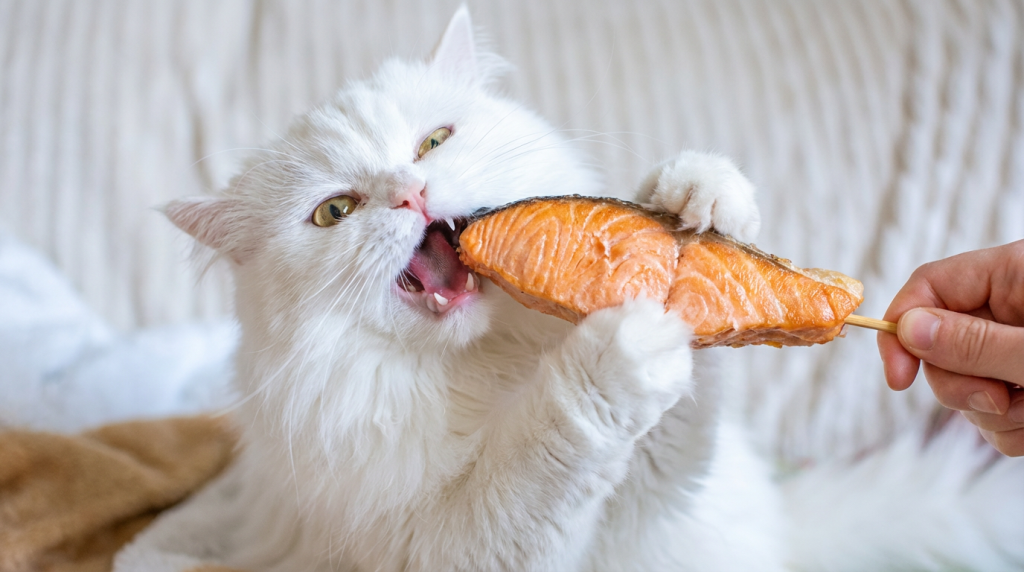
Cat owners often wonder if it’s safe to share a bit of human food with their feline friends. In many cases, the answer is no – cats have very different nutritional needs and digestive systems than we do. However, a few human foods can be given as occasional treats if prepared properly. Below we evaluate 14 common foods and whether your cat can eat them. Always remember: when in doubt, stick to cat food or consult your vet before feeding your cat something from your plate.
Can My Cat Eat Cooked Fish?
Yes, cats can eat cooked fish in moderation. A bit of plain, cooked fish (like salmon or whitefish) can be a healthy treat because it provides lean protein and omega-3 fatty acids. Just make sure the fish is cooked thoroughly and free of bones, and avoid adding any seasoning, salt, or sauces. Fish should be an occasional snack, not a major part of your cat’s diet, to ensure they still get all essential nutrients from their regular food.
Can My Cat Eat Raw Fish?
No – you should not feed your cat raw fish. Uncooked fish often carries parasites and bacteria that can make cats very ill. Raw fish also contains an enzyme that destroys thiamine (vitamin B1) in cats, which can lead to serious neurological problems. To be safe, only offer fish to your cat if it’s fully cooked (and deboned).
Can My Cat Eat Biscuits?
Cats shouldn’t be eating human biscuits (cookies or crackers) as a regular treat. While a small nibble of a plain biscuit probably won’t harm them, biscuits are full of carbohydrates, sugar, or salt – basically empty calories for an obligate carnivore like a cat. Regularly eating high-carb foods can contribute to weight gain and nutritional imbalances in cats. Moreover, many biscuits contain ingredients like chocolate, raisins, or spices (e.g. garlic, onion) that are toxic to cats. It’s safest to avoid sharing biscuits, and instead offer a cat-safe treat or a piece of plain cooked meat.
Can My Cat Eat Cooked Meat?
Yes, cats can eat cooked meat. Lean, cooked meats such as beef, turkey, lamb, or pork are natural protein sources for cats and can be given as the occasional treat. Make sure the meat is plain (no seasoning or sauces), thoroughly cooked (no raw or bloody bits), and cut into small pieces. Remove any bones, skin, or excess fat before feeding. Cooked meat can complement your cat’s diet in small amounts, but it should not replace a balanced cat food that has all the vitamins and taurine cats need.
Can My Cat Eat Raw Meat?
It’s generally not recommended to feed your cat raw meat. Raw meat can harbor harmful bacteria like Salmonella or E. coli, as well as parasites, which pose a risk to your cat’s health (and to humans in the household). While cats are carnivores, the pathogens in store-bought raw meat could still make them sick. Unless you are following a veterinarian-approved raw diet plan with strict food safety protocols, it’s safer to stick with cooked meats for your cat.
Can My Cat Eat Cooked Chicken?
Yes, cooked chicken is often one of the best human foods to share with a cat. Plain, boneless chicken (boiled or baked without seasoning) is a lean, easily digestible protein that many cats love. Let the chicken cool and cut it into small, bite-sized pieces before serving. Never give cooked chicken bones – cooked bones can splinter and cause choking or internal injuries. As with any treat, offer cooked chicken in moderation (a few small pieces) alongside your cat’s regular balanced diet.
Can My Cat Eat Raw Chicken?
No, you shouldn’t feed your cat raw chicken. Raw chicken commonly carries bacteria such as Salmonella and Campylobacter, which can cause severe diarrhea and illness in cats. Even if a cat doesn’t immediately appear sick from raw chicken, they can become carriers of these bacteria and potentially spread them (for example, through their litter box). Always fully cook chicken before sharing a little with your cat to avoid these risks.
Can My Cat Eat Cheese?
Most cats should not eat cheese. Cats may be attracted to the taste of cheese, but dairy products often don’t sit well with them. Adult cats are frequently lactose intolerant, meaning they lack the enzyme to digest the lactose sugar in cheese and milk. Eating cheese can lead to vomiting, diarrhea, or gas in many cats. A tiny nibble of a low-lactose, hard cheese (like cheddar) might be tolerated by some cats with no obvious issues, but it’s not a healthy or necessary treat. Cheese is also high in fat and salt, so it’s best to avoid deliberately giving cheese to your cat.
Can My Cat Eat Butter?
Butter is not toxic to cats, but it’s not really a good snack for them either. Butter is almost 100% fat, and too much fat can give cats digestive upset (such as diarrhea) or even contribute to pancreatitis over time. It’s true that butter contains very little lactose (the milk sugar), so a small lick likely won’t cause the same immediate stomach upset as a bowl of milk would. Even so, there’s no nutritional benefit in feeding butter to your cat. If your kitty steals a tiny taste of butter off the counter, it’s generally not an emergency – but it’s wise not to offer butter as a treat.
Can My Cat Eat Cooked Eggs?
Yes, cats can eat cooked eggs in moderation. Eggs are a great source of animal protein and amino acids, and many cats enjoy them. You can offer a bit of scrambled egg or hard-boiled egg, as long as it’s fully cooked and plain (no salt, pepper, butter, or oil). A teaspoon or two of cooked egg is plenty for a cat; eggs are rich, so you don’t want to overdo it. Cooked eggs can be a healthy occasional treat or protein supplement to your cat’s meal.
Can My Cat Eat Raw Eggs?
No – raw eggs are unsafe for cats (just as they are for people). Feeding a cat raw eggs runs the risk of exposing them to bacteria like Salmonella or E. coli, which can cause serious illness. Raw egg whites also contain avidin, a protein that can interfere with biotin (vitamin B7) absorption, potentially leading to skin or coat problems over time. Always cook eggs before letting your cat have a taste, and you’ll eliminate these risks.
Can My Cat Eat Bread?
Plain baked bread is not toxic to cats, but it’s not particularly useful for them either. Cats are obligate carnivores with no nutritional need for carbohydrates, and bread is basically all carbs (plus some fiber) with minimal protein. A small bite of plain white or wheat bread on occasion won’t harm an otherwise healthy cat, but bread should not be a regular snack. Importantly, avoid any breads that contain raisins, garlic, onions, or xylitol (a sweetener) – those additions can be very dangerous to cats. And never let your cat eat raw yeast dough: dough can expand in the stomach and produce alcohol, which can be life-threatening.
Can My Cat Eat Yogurt?
Surprisingly, plain yogurt is one dairy product that some cats can handle in small amounts. The active cultures in unsweetened yogurt help break down lactose, so it’s a bit easier to digest than milk. A teaspoon of plain, unsweetened yogurt might be a fine occasional treat – it provides protein and probiotics. However, not all cats will tolerate yogurt well; some might still get an upset stomach. Always use plain yogurt (no sugar, flavorings, or artificial sweeteners – xylitol is extremely toxic to cats). If your cat shows any sign of diarrhea or discomfort after trying yogurt, don’t continue offering it.
Can My Cat Eat Cream?
Offering a cat a saucer of cream or milk is a classic image – but in reality, cream isn’t a great treat for cats. Cream, like other high-fat dairy products, contains lactose and a lot of fat, which frequently leads to digestive upset in adult cats. While heavy cream has somewhat less lactose sugar than regular milk, most cats still can’t digest it properly. You might get away with letting your cat have a lick or two of cream as a very rare indulgence (if they aren’t obviously lactose intolerant), but there’s no health benefit in it. In fact, given the calorie density, routine feeding of creamy dairy could contribute to weight gain or pancreatitis. Your cat will be perfectly fine – and probably healthier – without cream or milk in their diet.
Key Takeaways
- Safe in Small Amounts: Cats can have a little bit of plain, cooked meat, fish, or egg as a treat. These should be unseasoned, fully cooked, and bone-free. Keep portions small (a bite or two) and remember these treats should make up less than 10% of a cat’s overall diet.
- Avoid Raw Foods: Do not feed your cat raw animal products (raw fish, raw meat, raw poultry, or raw eggs). Raw foods can carry dangerous bacteria and parasites, and some (like raw fish or egg whites) contain enzymes that can cause vitamin deficiencies in cats. Cooking these foods eliminates those hazards.
- Limit Dairy: Most cats are lactose intolerant. Foods like milk, cheese, cream, and butter often cause diarrhea or vomiting. A small lick of certain dairy (like hard cheese or plain yogurt) might be tolerated by some cats, but it’s safest to treat dairy as an occasional exception or avoid it entirely. Cats do not need dairy in their diet.
- Junk Food Isn’t For Cats: Human foods high in carbohydrates or additives – such as bread, biscuits, sweets, and pastries – provide no nutritional benefit for cats. While a tiny taste of plain bread or cracker isn’t toxic, too many carbs can lead to obesity and other health issues. Never give sweets or baked goods that contain chocolate, raisins, onion, garlic, or xylitol, as these can poison your cat.
- When in Doubt, Stick to Cat Food: Cats won’t miss out by not eating human foods. The safest approach is to feed a quality commercial cat food and use vet-approved cat treats. If you’re ever unsure about a particular food, check with your veterinarian first. Your cat’s health is worth more than giving them a bit of “people food” curiosity.
Sources
- https://www.petmd.com/cat/nutrition/can-cats-eat-chicken
- https://www.petmd.com/cat/nutrition/can-cats-eat-eggs
- https://www.petmd.com/cat/nutrition/can-cats-eat-salmon
- https://www.petmd.com/cat/nutrition/can-cats-eat-bread
- https://www.aspca.org/pet-care/animal-poison-control/people-foods-avoid-feeding-your-pets
- https://www.cats.org.uk/help-and-advice/diet/cats-and-human-foods